

Indiana bicycle laws are designed to define where and how bicycles can be operated, but too often they’re ignored or misunderstood by drivers. In one recent year, Indiana recorded 31 bicyclist deaths and dozens of serious injuries. Indianapolis alone saw a record-setting spike in bicycle accidents, with eight cyclist fatalities and 11 catastrophic injuries recorded weeks before the year’s end. Many of these crashes involved drivers who failed to yield, check blind spots, or give cyclists space.
Knowing the laws that apply to cyclists and drivers across Indiana is the first step to safer cycling. From sidewalk riding to safe passing requirements, these rules shape how bicycles are treated under state law. They can also determine the legal remedies that are available to you if you were injured by a negligent driver while cycling. Consult an experienced bicycle accident lawyer to learn how you can put the law to work for you and pursue compensation for your medical bills, missed work, pain and suffering, and more.
Bicycling in Indiana: Key Takeaways About Cycling Laws and Safety
- Bicyclists in Indiana generally have the same rights and responsibilities as drivers under state traffic laws.
- There is no statewide helmet law in Indiana, but local ordinances may still apply to children.
- Bicycles are not legally defined as vehicles, but riders must still follow nearly all traffic rules that apply to motor vehicles.
- Sidewalk and bike lane rules vary by city and are not uniformly regulated at the state level.
- If you’ve been injured in a crash, a qualified Indiana bicycle accident lawyer can help determine liability and pursue fair compensation.
Do Cyclists Have to Follow Traffic Laws in Indiana?
Indiana law states that cyclists have all the rights and duties of drivers, with some exceptions. This means you must obey traffic signals, yield signs, and right-of-way rules just like someone driving a car. While this might seem burdensome, these laws are designed to keep cyclists safe and reduce confusion between different types of road users.
The primary law governing bicycle use in Indiana is found in Indiana Code § 9-21-11-2, which confirms that a person riding a bicycle must follow the same laws as drivers, unless a specific regulation applies only to bicycles.
These rules include:
- Stopping at red lights and stop signs
- Signaling turns using hand signals
- Yielding the right-of-way when required
- Avoiding riding against traffic
Not following these rules doesn’t automatically make you liable for a crash. However, breaking a traffic law could reduce your ability to recover compensation under Indiana’s modified comparative fault rule — more on that later.
Where Can You Ride a Bike in Indiana?
 Location matters when it comes to following Indiana biking rules. Some areas allow sidewalk riding, while others don’t. Knowing where bicycles are allowed is essential, especially if your accident occurred somewhere unexpected.
Sidewalks and pedestrian areas
Indiana does not have a state law banning bicycles on sidewalks. However, local ordinances control this issue, especially in urban areas like Indianapolis or Fishers. For example, Indianapolis Municipal Code prohibits bicycle riding on sidewalks in designated business districts. Many other municipalities do not currently ban sidewalk riding, but local signage may provide additional restrictions in school zones or near city centers.
Roads and streets
Cyclists traveling slower than vehicle traffic must ride as close as “practicable” to the right-hand edge of the road under Indiana Code § 9-21-8-2. This rule includes exceptions, such as when:
- Passing another cyclist or vehicle
- Preparing for a left turn
- Avoiding hazards or obstacles
- The lane is too narrow for a car and a bike to safely share side by side
Bike lanes and paths
Unlike some states, Indiana does not require bicyclists to use bike lanes or separated facilities if available. You may use a regular traffic lane unless otherwise marked by local regulations.
What Are the Helmet Laws for Bicyclists in Indiana?
Surprisingly, Indiana has no statewide helmet law for bicyclists of any age. That means adults and children are legally allowed to ride without a helmet, though wearing one significantly reduces the risk of serious head injuries.
Some cities and schools have local policies that may require helmets for children under a certain age. Even if helmets aren’t legally required, courts and insurance companies may still consider helmet use when assessing fault and injury severity.
Basic helmet safety tips
- Choose a helmet that fits snugly and meets safety standards
- Replace helmets after a crash or if they show signs of damage
- Encourage children to wear helmets, even if not legally required
Following a crash, failure to wear a helmet won’t necessarily bar your claim. However, defense attorneys may try to argue that your head injuries were worse because of it. An Indiana bicycle accident lawyer can counter those claims with expert medical analysis.
Are Electric Bikes Legal in Indiana?
Electric bicycles, or e-bikes, are becoming increasingly common on Indiana roads and trails. Indiana bicycle laws classify e-bikes into three categories and treat them differently from motorized vehicles in most contexts.
- Class 1 and 2 e-bikes: Allowed on most bike lanes and paths unless restricted by local ordinance
- Class 3 e-bikes: Limited to roadways and designated bike lanes, not shared-use paths unless permitted
E-bike riders must follow the same general rules as traditional bicyclists. However, some trails and parks may ban e-bikes entirely or require dismounting in crowded areas. Always check signage and local regulations before using an e-bike on trails such as the Fall Creek Greenway or White River Trail.
What Should Drivers Know About Sharing the Road With Bicyclists?
Bicycles have the same rights to use the road as motor vehicles, even if some drivers treat them as an afterthought. The Indiana State Police reminds drivers to be cautious, especially around schools, neighborhoods, and parks. Children often ride without much road sense, making patience and attentiveness even more critical.
Here are some important reminders for drivers who encounter cyclists on the road:
- Pass safely by giving the cyclist plenty of room
- Never honk when close to a cyclist — it can startle and cause a crash
- Look before turning, especially at intersections and driveways
- Slow down in areas with visible bike activity
If you’ve been hit by a car while biking, it’s important to determine whether the driver acted negligently. That could mean failing to yield, driving while distracted, or attempting to pass too closely.
What to Do if You Were Hit by a Car While Riding a Bicycle in Indiana?
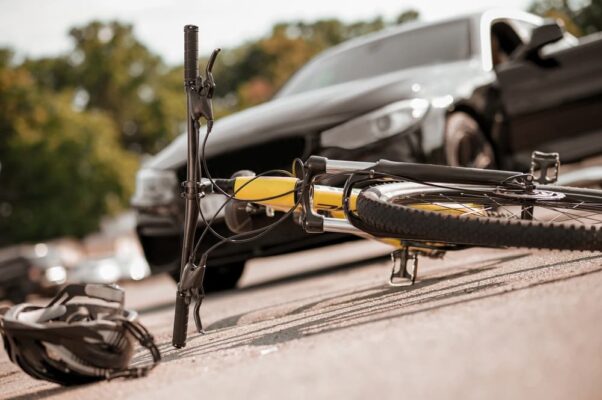 Getting hit by a car while on a bike is a terrifying experience, and the days and weeks that follow can be legally complicated.
Here’s what to do next if you were hit:
- Hire a lawyer: An Indiana bicycle accident lawyer can investigate the crash, gather evidence, and negotiate with insurance companies on your behalf.
- Keep all medical appointments: Skipping treatment can hurt both your health and your legal case.
- Document your recovery: Journal your symptoms, challenges, and emotional distress to support non-economic damages.
- Secure any footage: Video from traffic cameras or nearby businesses can be critical in proving what happened.
- Avoid quick settlements: Insurers may pressure you to accept a lowball offer before you know the full cost of recovery.
Even if you were partly responsible, Indiana’s 51% comparative fault rule still allows you to recover damages as long as you were not more at fault than the driver.
Is It Legal to Ride a Bike at Night in Indiana?
Yes, you can ride at night, but only if your bike is properly equipped for visibility. Crashes are more likely to happen in low-light conditions, especially near wooded trails, busy intersections, or two-lane roads outside of cities like Fishers or Noblesville.
Under Indiana Code § 9-21-11-9, you must have:
- A front white light visible from at least 500 feet
- A red rear reflector or red light visible from 500 feet
- Reflectors or reflective material on both sides of your bike or clothing
Without these, you’re not just breaking the law, you’re risking your safety. A driver who hits a poorly lit bike at night may still be at fault, but missing safety gear could complicate your case. If you’ve already been injured in a nighttime crash, get medical treatment first, then contact a bicycle accident lawyer to protect your claim.
Key Legal Points Every Cyclist Should Know
Some rules are straightforward. Others are buried in city codes or state statutes. These three laws often surprise riders — and can have a big impact after a crash.
Biking under the influence
Yes, it’s illegal. Indiana’s DUI law applies to bicycles, even though they aren’t motorized. A conviction for biking while intoxicated can carry fines, jail time, and a criminal record, especially if a crash occurred.
“Dead red” light rule
If a red light doesn’t detect your bike, Indiana law allows you to treat it as a stop sign after waiting 120 seconds. But you must proceed with caution and yield to other traffic.
Local law overrides
There is no statewide law on sidewalk riding or mandatory helmet use. Instead, Indiana gives cities the power to create their own rules. That means the law may change from one block to the next depending on where you’re riding.
Bicycle Helmets and Child Safety in Indiana
 As we’ve mentioned, Indiana doesn’t have a law requiring helmets for bike riders, even children. Unfortunately, when children are seriously hurt in bike crashes, the outcome is often devastating.
Children are more likely to:
- Misjudge traffic speed or distance
- Dart into the road from sidewalks or driveways
- Ride during high-risk hours like early evening or weekends
If your child was injured in a crash, you’re probably dealing with medical fears, financial stress, and emotional questions about what went wrong. Don’t carry those questions without seeking a personal injury lawyer’s advice. You may have legal options, especially if a distracted or speeding driver hit your child near a neighborhood, crosswalk, or school zone.
Questions Indiana Bicyclists Often Ask About Local Cycling Laws
You typically have two years from the date of the crash to file a personal injury lawsuit under Indiana Code § 34-11-2-4. Certain factors may extend or shorten this window, so it’s best to speak with a lawyer as soon as possible.
In most cases, yes. If a driver’s negligence caused your crash, their auto insurance may cover your damages. But proving fault isn’t always simple, especially if the police report is incomplete or inaccurate.
Bicycles are prohibited from most interstates and highways unless signs specifically allow them. Riding on shoulderless, high-speed roads puts you at risk and may impact fault analysis after a crash.
Possibly. If a government entity failed to maintain a public road or trail, you may have a claim. However, these cases follow strict notice deadlines and require proof of negligence.
Yes. Indiana law does not require helmets, so failure to wear one doesn’t automatically reduce your claim. But insurance companies may argue your injuries would have been less severe with one, especially in head trauma cases.
Next Steps: Speak With a Fishers, Indiana Bicycle Accident Lawyer
The law doesn’t undo the damage you’ve suffered, but it does create a line between what’s acceptable and what isn’t. When that line gets crossed — when a driver negligently injures you — it’s not just a traffic violation. It’s a failure of responsibility, and you’re allowed to seek compensation.
At Wyant Law, we work with injured cyclists and their families across Fishers, Hamilton County, and throughout Indiana. You’ll work directly with attorney Chris Wyant, a proven and experienced personal injury lawyer who listens, explains, and puts your needs first. We don’t waste time. We dig into the details, protect your rights, and fight for fair compensation so you can focus on healing.
Call us at (317) 683-0333 or contact us online for a free consultation today.